
Isaac Adjei
Electronic Engineering & Computer Science
Building at the intersection of hardware, software and AI/ML.
EE & CS student at Aston University, Birmingham, building across the full stack of engineering and technology. Open to internships, placements and professional opportunities.
Not sure where to start? See all pages →
About
Engineering problems worth solving
I am Zac, an Electronic Engineering and Computer Science student at Aston University. I grew up in Ghana, relocated to the UK in 2022 and earned a triple Distinction in engineering, being recognised as Best and Most Hardworking Student at Stanmore College, before starting Electronic Engineering and Computer Science at Aston. I work at the intersection of hardware and software, spanning embedded systems, machine learning and production web development.
My late father was a mechanical engineer. His words, “Always strive to make things better”, still guide everything I build. I focus on accessible technology and systems that serve real users, the kind of engineering that matters beyond the screen.
Projects
Featured work


Zacess: Make Every Page Accessible
A free, open-source reader that turns PDFs, scans and web pages into notes in your own reading profile, plus an accessibility profile for every terminal, editor and web page, code themes, terminal scenes and games, all from one contrast-checked palette.


PHAEMOS: Predictive Maintenance Platform
An open industrial IoT platform that streams sensor readings from four microcontroller nodes, scores every reading with a calibrated Isolation Forest and turns sustained anomalies into alerts and maintenance tickets on a live dashboard.

4x4x4 NeoPixel LED Cube
64 individually addressable WS2812B LEDs on an Arduino Uno with adaptive brightness, four animation modes and a custom wooden enclosure.

Two-Stage Audio Amplifier
Analogue two-stage amplifier with a TL071 active band-pass filter and an OPA551 buffer, simulated in Proteus and built on a custom PCB that drives an 8 Ω speaker.

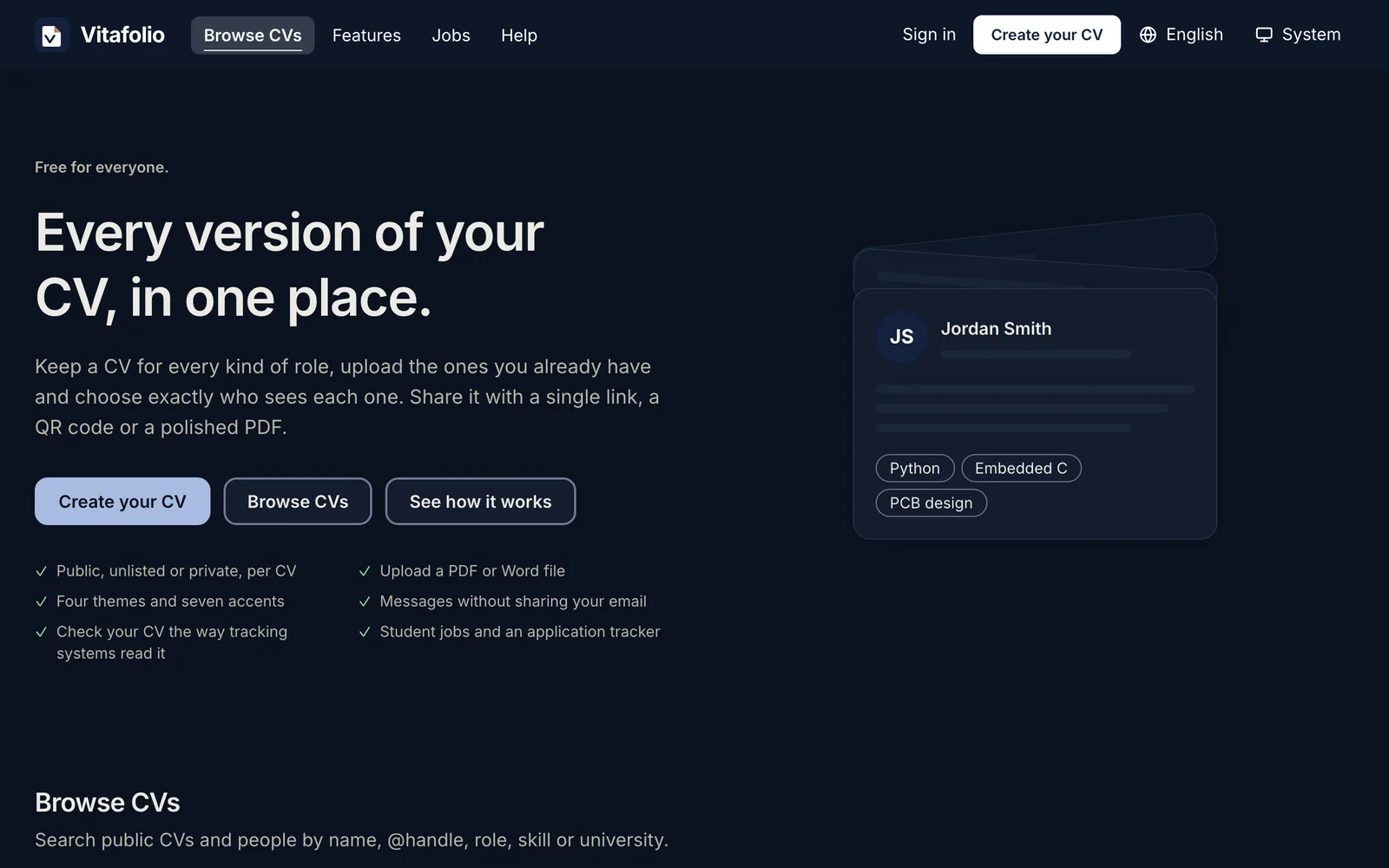
Vitafolio: Every Version of Your CV
A free Laravel web app for building, storing and sharing every version of a CV, each with its own theme, privacy setting and link, with LaTeX compiled in the browser, a CV checker and a student jobs tracker.

LidarSAT: GPS-Denied Drone Navigation
A four-person research project on locating a drone without GPS by matching LiDAR height profiles to public terrain maps, comparing a classic matcher with a learned one. I own the repository and tooling, error measurement and the drone side, from simulated flights to flight logs.
Writing
Featured posts
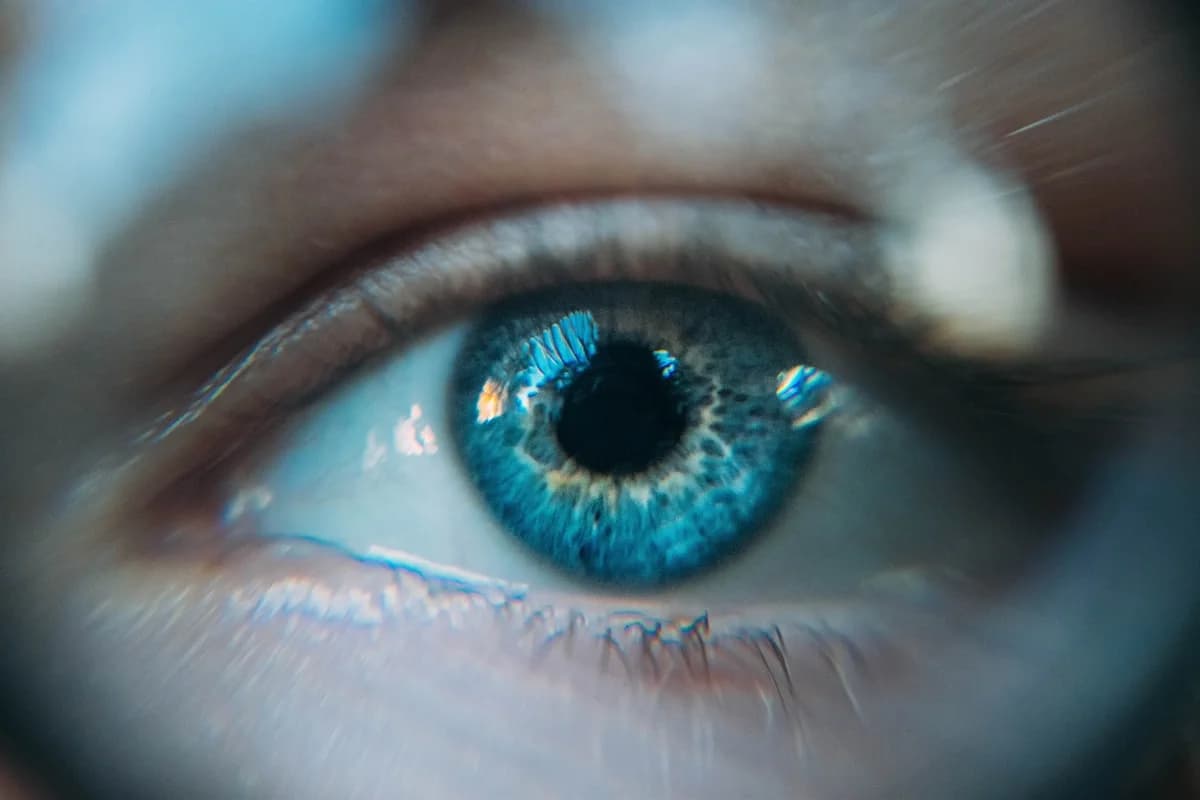
Bionic Vision and Ocular Prosthetics: Where the Science Actually Stands
A technical survey of retinoblastoma, ocular prosthetics and bionic vision systems: what prosthetic eyes can and cannot do, how retinal implants work and where the engineering challenges in restoring functional vision lie.

Designing and Building a Two-Stage Audio Amplifier from Scratch
Full technical report on the design, simulation, PCB fabrication and testing of a two-stage audio amplifier using a TL071 active band-pass filter and OPA551 unity-gain output buffer, optimised for an iPhone input and 8 ohm speaker load.


Shipping a Website in Seven Languages, Right to Left Included
How Vitafolio went from English only to seven languages including Arabic and Urdu: picking the language, keeping strings in sync, mirroring layouts with logical CSS and the one-byte bug that broke Arabic PDFs.

Building Light-Guided Practice in the Browser with Web MIDI
How the MELOPHOS Studio reads a real keyboard through Web MIDI, lights the next note in amber and scores every note for pitch and timing, all in a browser tab.

How GPS Works and Why It Needs Einstein
How GPS turns radio timing into a position, why it needs four satellites and why both of Einstein's theories of relativity are built into every satellite clock.

Hubble's Flawed Mirror: How 1.3 mm Blurred a Space Telescope
How one misplaced lens let the Hubble Space Telescope reach orbit in 1990 with a mirror polished precisely to the wrong shape and what that teaches about trusting a single test.
Learning
Today I Learned
Set dir="rtl" on the html element, not direction in CSS
For Arabic and Urdu pages the base direction belongs in the markup: `<html lang="ar" dir="rtl">`. The [W3C advises](https://www.w3.org/International/questions/qa-html-dir) against setting it with the CSS `direction` property because direction is part of the content and must still be there when the stylesheet is not. For text supplied at run time that could go either way, such as a name in a list, use `dir="auto"` or a [`<bdi>`](https://developer.mozilla.org/en-US/docs/Web/HTML/Reference/Elements/bdi) element. Either one lets the browser decide per element. Vitafolio's Arabic and Urdu locales are built this way.
7 Nov 2026
PDF/UA is ISO 14289 and it is about tags, not looks
PDF/UA, short for Universal Accessibility, is published as ISO 14289. Part 1 (2012, revised in 2014) builds on PDF 1.7. Part 2 (2024) builds on PDF 2.0. It requires a tagged PDF where real content is tagged in a logical reading order, decoration is marked as an artifact and meaningful images carry alternative text. A PDF can look perfect on screen and still fail, because a screen reader follows the tags rather than the page. The free [veraPDF](https://docs.verapdf.org/cli/validation/) validator checks a file against the standard. Vitafolio's PDF tests can keep each generated file for checking with it.
5 Nov 2026
An op-amp's slew rate caps how big a signal it can pass at high frequency
Slew rate is the fastest an op-amp's output can change, in volts per microsecond. A sine wave of peak voltage Vp at frequency f changes fastest at its zero crossing, at 2πf x Vp, so the largest undistorted frequency is f = SR / (2π x Vp). Above that the output turns into a triangle wave even though the gain-bandwidth product says the amplifier should cope. The [LM358 datasheet](https://www.ti.com/lit/ds/symlink/lm358.pdf) lists 0.3 V/µs for the original part, which runs out at under 5 kHz for a 10 V peak signal.
3 Nov 2026
Notebook
Notes
What I look for in a placement
I am applying for a year-long placement starting in 2027 across embedded, hardware and software teams. These are the things that matter to me when I decide where to apply, ranked honestly.
6 Nov 2026
Taking lecture notes with low vision in mind
Recording lectures with the slides open in Genio Notes, marking the moments that matter, writing my own notes and lab reports and photographing lab setups. The habits that make lectures and labs workable for me.
23 Oct 2026
Putting Fedora beside Windows on my ThinkPad
Why my ThinkPad now dual boots Windows 11 and Fedora KDE Plasma, what I kept from Windows and how the whole setup is saved so the next laptop is quick to build.
21 Oct 2026
Skills
Technologies I work with
Platforms & Operating Systems
Core Tools
Languages & Software
Let's work together
I am actively looking for internship and placement opportunities in engineering and technology. Whether you have a role, a project, a collaboration idea or just want to connect, I am always open to a conversation.